

Darkroom Magic
from camera to print, 1956

In Mountain Tales I am creating a non-linear series of snapshots. I am in the process of completing a manuscript about my Grandfather, his family history, and his place in the colonial saga of the Canadian Rockies. I will be looking for a publisher in the New Year of 2026.
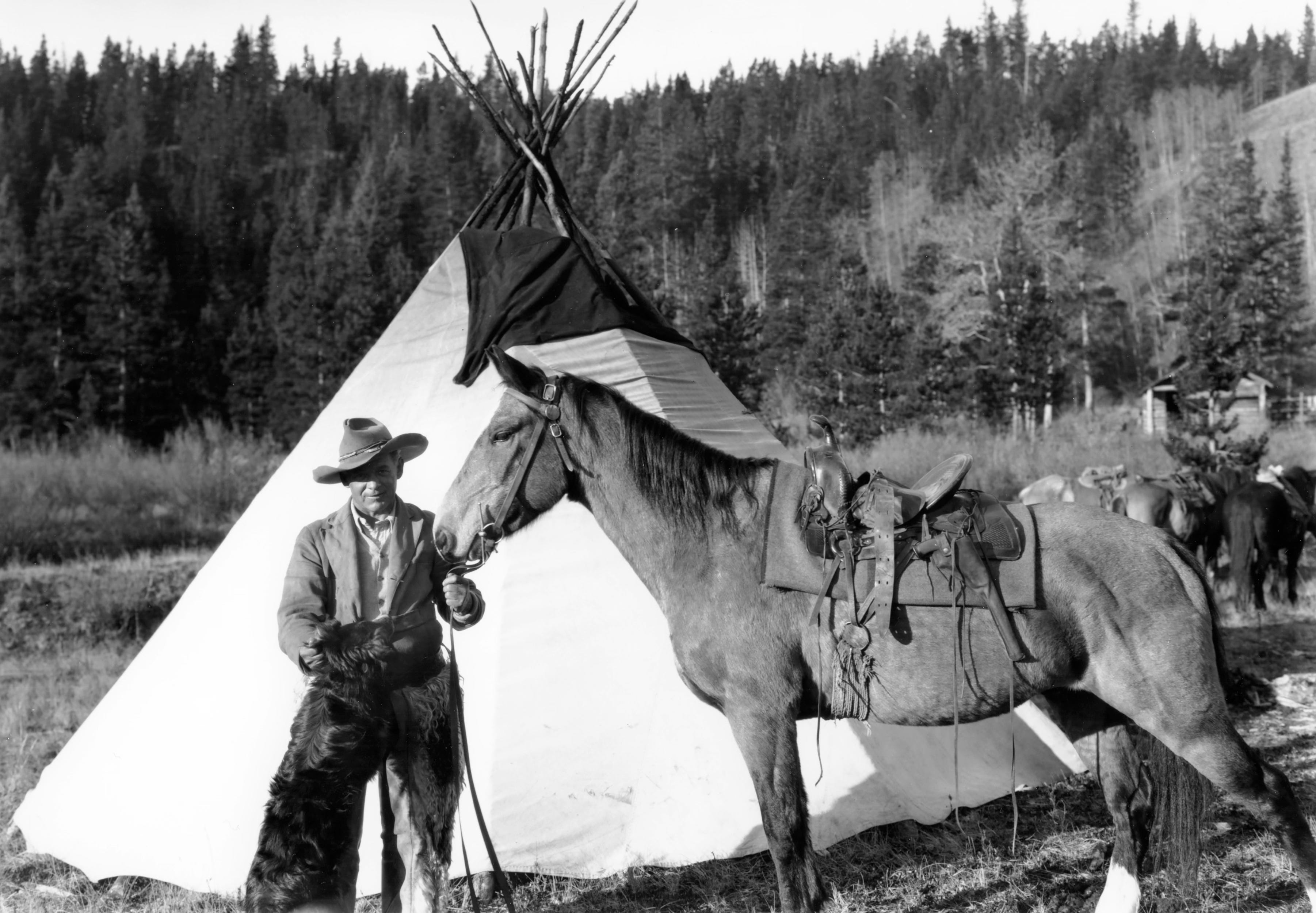
My father, Don Harmon, was the youngest child of Byron Harmon, the first professional wilderness photographer in Banff who photographed and filmed the Rockies between 1904, when he established Byron Harmon Photos in Banff, and the mid 1930’s when ill health halted his adventures.
He created and sold postcards, prints, viewbooks and novelty items such as flip books and miniature packets of postcards in his own Harmons building in Banff which housed Harmony Drugstore and Gift Shop, Harmony Tea Room, and an assortment of small departments such as a lending library and a hair salon, depending on the needs of the town. His commissioned series, Along the Line of the CPR, was sold on the trains across Canada. His films of the Rockies were sold to news agencies such as Fox News, Associated Screen News, and the Canadian Government Motion Picture Bureau, precursor to the National Film Board.
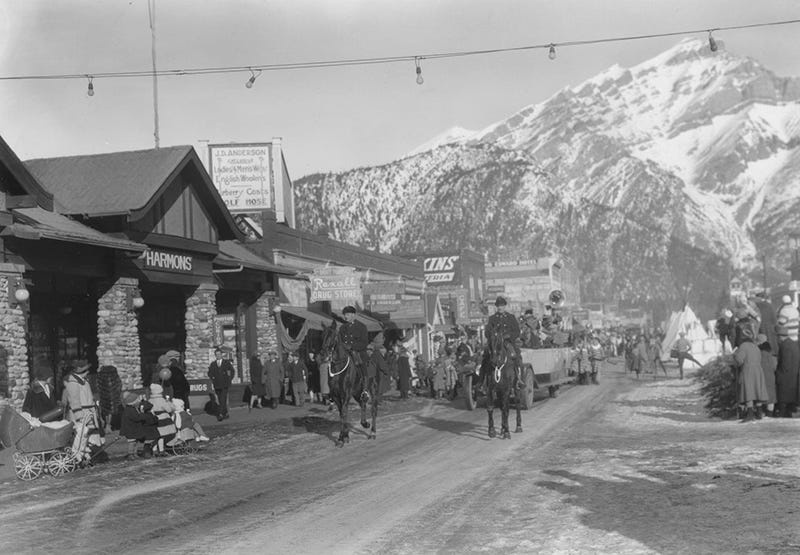
Byron died in 1942. After the war Dad returned to Banff with his war bride, Norah McGill, and took over running the Harmons building and Byron Harmon Photos.
The following piece is from an earlier manuscript which was considered for publication but ultimately didn’t make it. It was written more from my own point of view than my current manuscript, with a strong memoir component. I love being able to raid it for these posts.
The following excerpt was written from the point of view of myself at age nine.
1956
It’s spooky in Dad’s darkroom because everything looks red and black from the red light, like someone might jump out of the shadows.
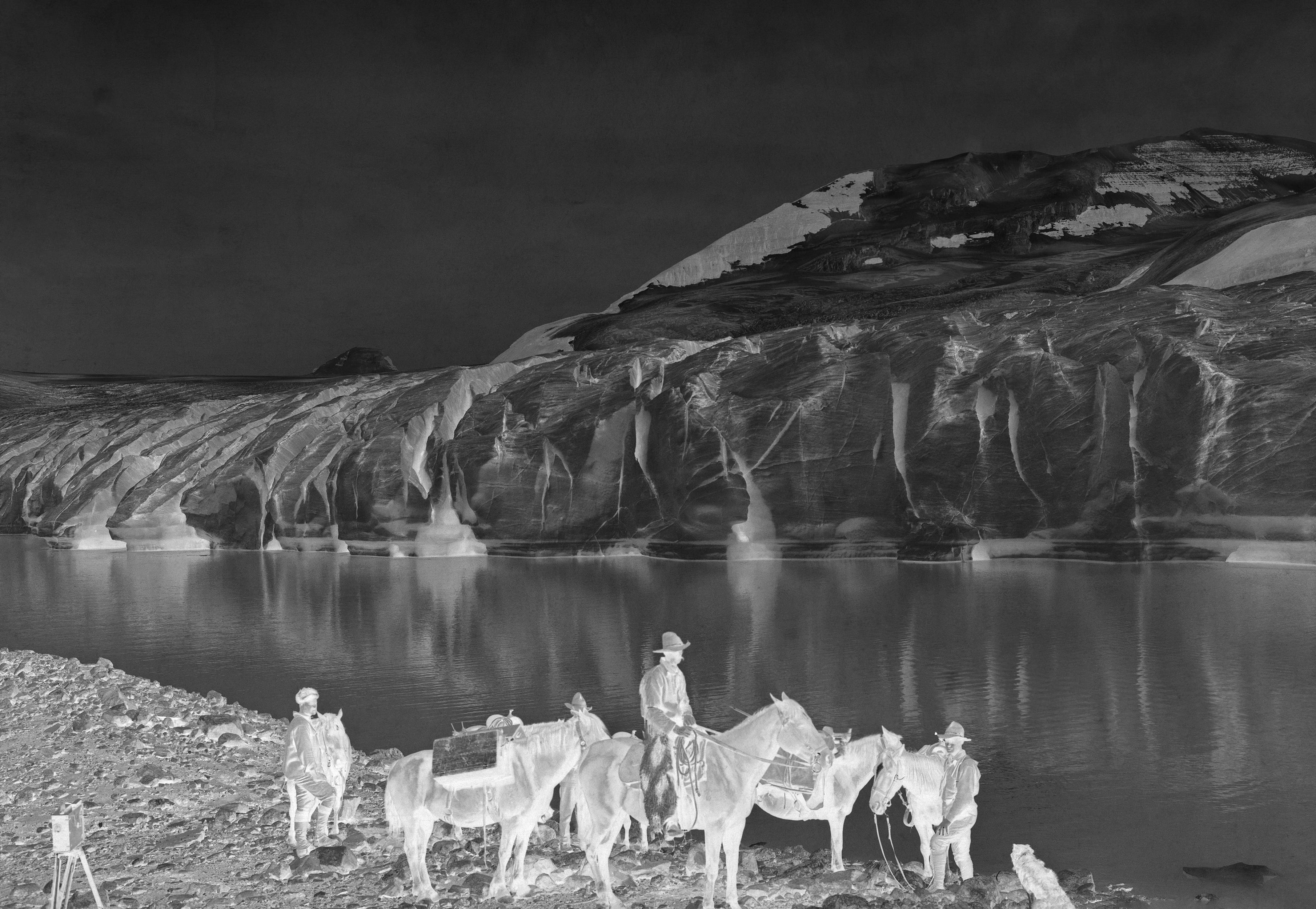
There’s a machine called an enlarger on the wall where Dad puts Grandpa’s old negatives between two pieces of metal with a hole in the middle called a negative holder. He pins a big sheet of paper on the other wall, says “close your eyes Carole”, then there’s a bright flash from the Carbon Arc light. I always peak—I see the picture on the paper upside down and backwards—glaciers are black and horses are white. The picture’s there and then it’s gone but I still see it if I close my eyes.
Here’s the magic part. After Dad exposes the paper the real picture is hiding but you can’t see it. He takes the paper down off the wall and puts it in a big tray of developer. The dark parts come up first then slowly you see the rest of the picture but now the sky is light and the forest dark. Dad rocks the tray back and forth to coax the light parts to come out. When the image is perfect he puts the print in another tray to stop it getting darker then a third tray to fix the image. Then he turns on the regular lights.
We come out of the darkroom into his big workroom. There’s a long sink to wash the big sheets of prints in. Sometimes it’s one big picture and sometimes a bunch of little ones Dad will cut up into postcards. He lets me move them around so they wash properly. The water’s so cold it burns my hands. Next we roll them between big sheets of blotting paper and put them in round metal tubes buried in the walls of a little room over the furnace so they can dry.
There’s a long table behind the sink with big blades to cut up paper and trim the edges. Dad stamps the back of the postcards Byron Harmon Photos, Banff, Canada and the name of the place Grandpa took the picture.
I welcome your comments, please subscribe to be part of the conversation.
As always it’s a pleasure to read of your father and grandfather ànd thé impact they made on Canadian history. As you know Banff is a central place in my ancestral history
Recalling fondly you creating that same magic in the Toronto darkroom in the ‘70’s. I look forward to more of your writing!