

Portrait | Landscape
Byron Harmon started out as a portrait photographer

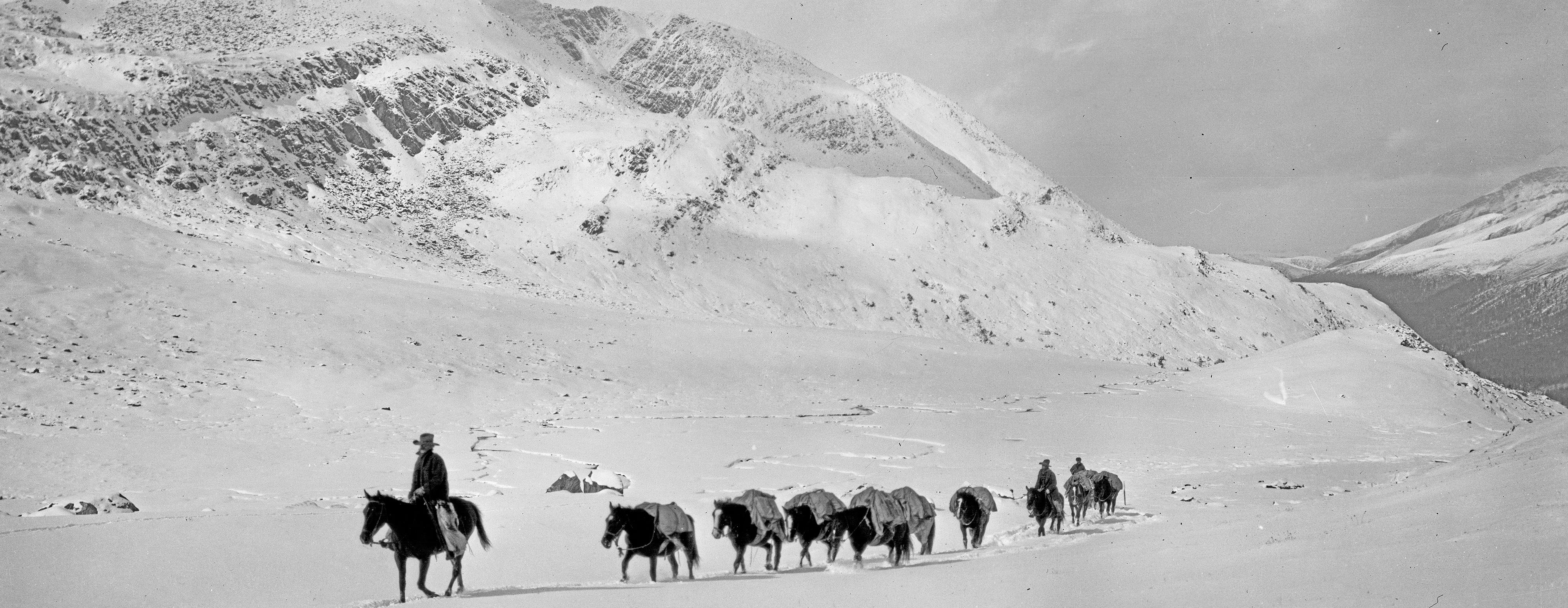
I published a shorter form of this post on the Mountain Tales blog on my website, Harmon Mountain Studios. It has different content, check it out.
Substack is where I get to play with longer articles.
In Tacoma, where Byron grew up, he was one of the young, avid fans of the new technology, photography. In 1899 his friends chipped in to help him open a studio and Harmon Photo Supply Company. But, sadly Tacoma and nearby Seattle suffered from the pollution created by the new industries of Puget Sound. So did Byron.
Seattle had leveled the hilltops surrounding the fledgling city and the air was filled with dust. Elevated corduroy roads made of logs with cracks between them criss-crossed the city; feces from horses travelling these roads passed through the cracks in the logs. Tacoma was the western terminal for the Northern Pacific Railway which had been belching coal smoke into the atmosphere since 1873. Airborn particulate from the lumber mills in Puget Sound had been increasing since the 1850’s. In 1989-90 the ASARCO smelter was opened near Tacoma; it melted rocks containing high amounts of arsenic and lead, discharging immense particulate pollution into the atmosphere. The tidal flats acted as a trap for industrial waste, emitting pungent odours. Everyone was dumping human and industrial waste into the ocean, including toxic chemicals from developing photographs. Modern studies use core samples from mud in Puget Sound to identify the trajectory of increasing, and eventually decreasing pollution.
Troubled by lung problems so severe he had to sleep sitting up, Byron left Seattle in 1900 as a travelling tintype photographer.
His mother, Clara Smith Harmon, had been a teacher of cookery at the residential school on the Puyallup Reservation in Tacoma for ten years. Byron and his siblings had lived on the reservation, and later in Tacoma, during her employment there from 1884-1895. Byron travelled inland and photographed individuals of the Blackfoot, Crow, Piegan, Sioux, Nez Perces, Blood and Cree tribes. In 1901 he returned to Tacoma and published his first photo “Viewbook”, Indians of the Western Prairies: Photogravures.
It is printed by the Albertype Company of Brooklyn, NY. The format is 8.26 in x 5.21 in, twenty-four pages, with images on the right of each interior spread. Each image page has been laid out, then rephotographed, to make the gravure printing plates. Individual tintypes have been carefully placed on top of intricate line drawings of Indigenous regalia, which serve as borders and backgrounds for the photographs. Drawn details of clothing, bows and arrows, feathers, hints of landscape backgrounds, war axes, peace pipes, buffalo on the plains embellish the pages. In places the drawings peter out, as though the artist has been interrupted, as though this cultural backdrop is disappearing.
A copy of Indians of the Western Prairies: Photogravures is held in the Thomas Fisher Rare Book Library at University of Toronto. It is missing its front cover. Digital copies of this book are listed in a number of North American libraries. It is the only physical copy I know of.
Then Byron left Seattle for good and ended up in Banff, in the Canadian Rockies. Some of his earliest photographs were also Indigenous portraits.
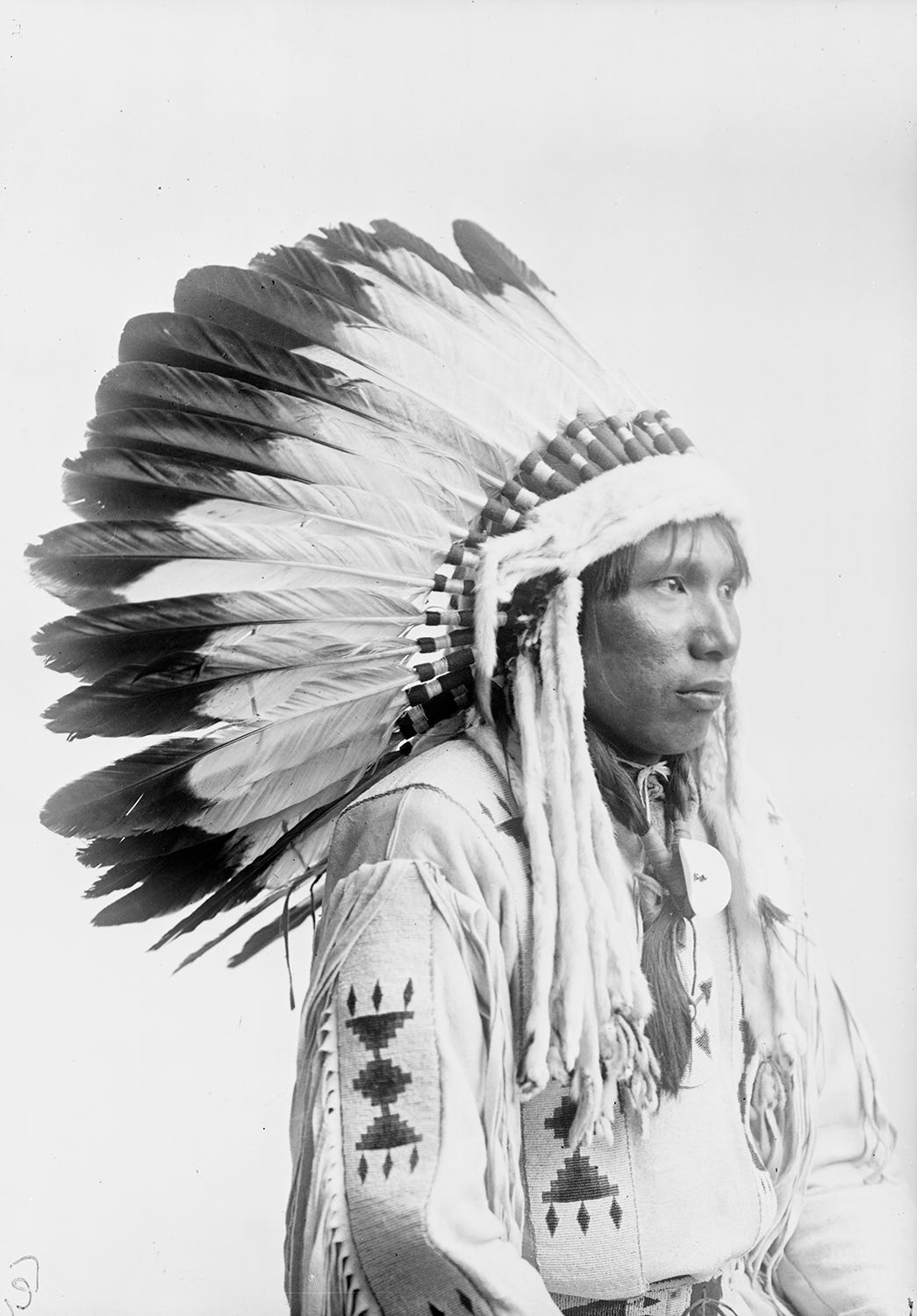
Byron never stopped photographing Indigenous individuals, sometimes at Banff Indian Days but often on the Stoney Nakoda Reservation between Banff and Calgary and in the Columbia and Windermere Valleys where he had a small farm.
Most of Byron’s portraiture was of mountains, or of people in the landscape. He had a good sense of humour. I love the following two image series.
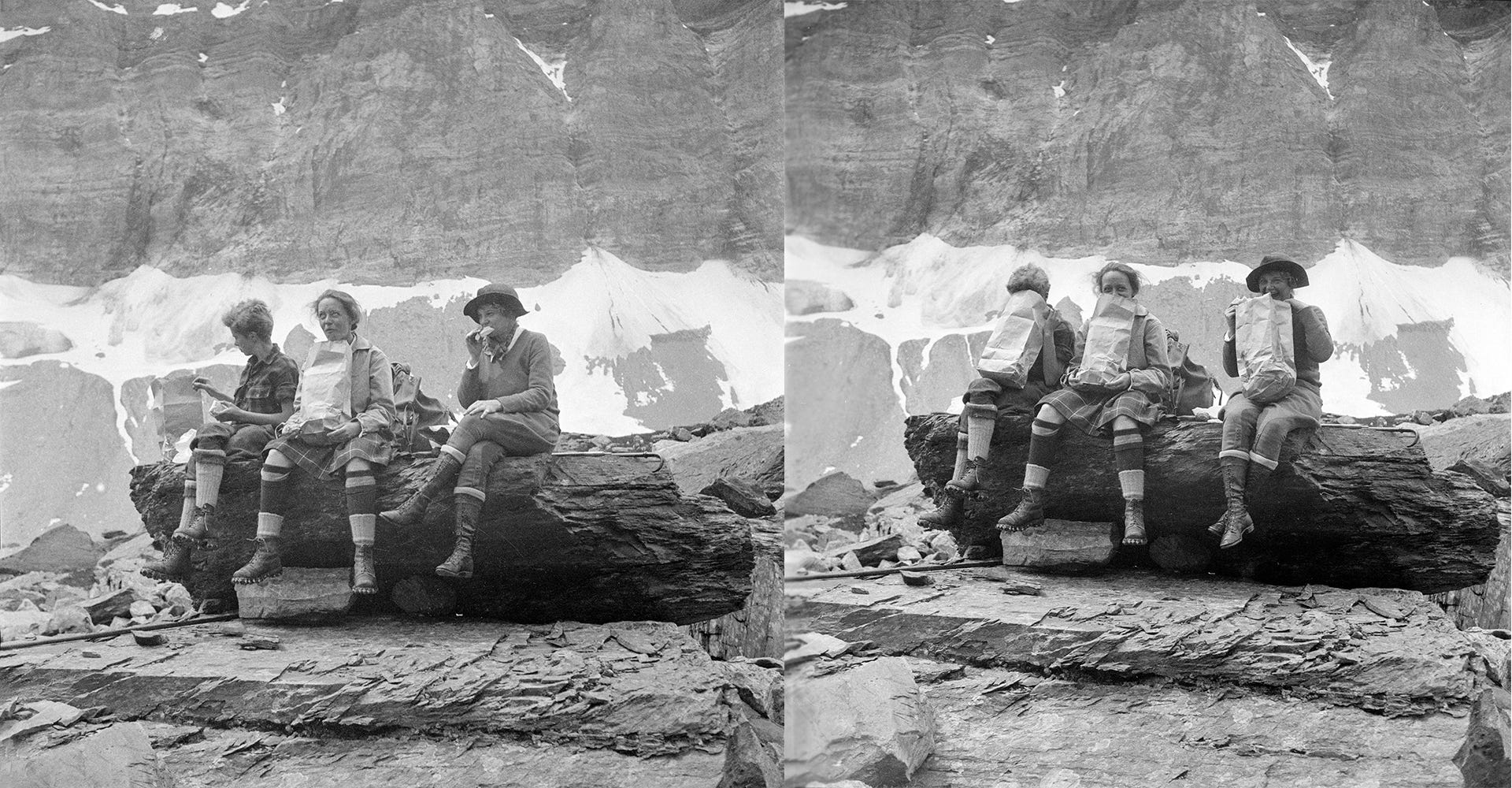
The Skyline Hikers were the offspring of Trail Riders of the Canadian Rockies, established in 1923 by a group pf friends, including Byron Harmon, sponsored by the C.P.R.
Three friends enjoy their bag lunches. The woman on the left is Georgia Engelhart, a climber renowned in the Canadian Rockies and Europe. She is the woman in William Oliver’s 1932 film, She Climbs to Conquer which I mentioned in my last post. She was also once in an ad for Camel cigarettes which I tried to use in an Altitude Publishing book, many years ago, when I was working on Lake Louise, A Diamond in the Wilderness with Jon Whyte. The company wouldn’t give me permission. The woman in the centre is Catherine Whyte, a painter and heiress from New England who married fellow artist Peter Whyte, (they met at arts school), and created the Whyte Museum of the Canadian Rockies in Banff. The woman on the right is unknown to me.
Some of the vignettes in this blog are drawn from my manuscript about Byron Harmon, his background, and his photographs. Previous books have been mainly portfolios of his images but this manuscript has lots of juicy and surprising history.
I hope to be finished soon and will be looking for a publisher. That’s a tall order these days so I may end up self-publishing.
In any event, if you are reading this blog and would like to be informed when the book is available, drop me a line with your name and email address at studio@harmonmountainstudios.com and I will put your name on my notification list.
I so appreciate all your research and stories of Byron and our beloved Rockies!
Thank you as always Carole! I love all your stories making the past live! 💓❣️💞